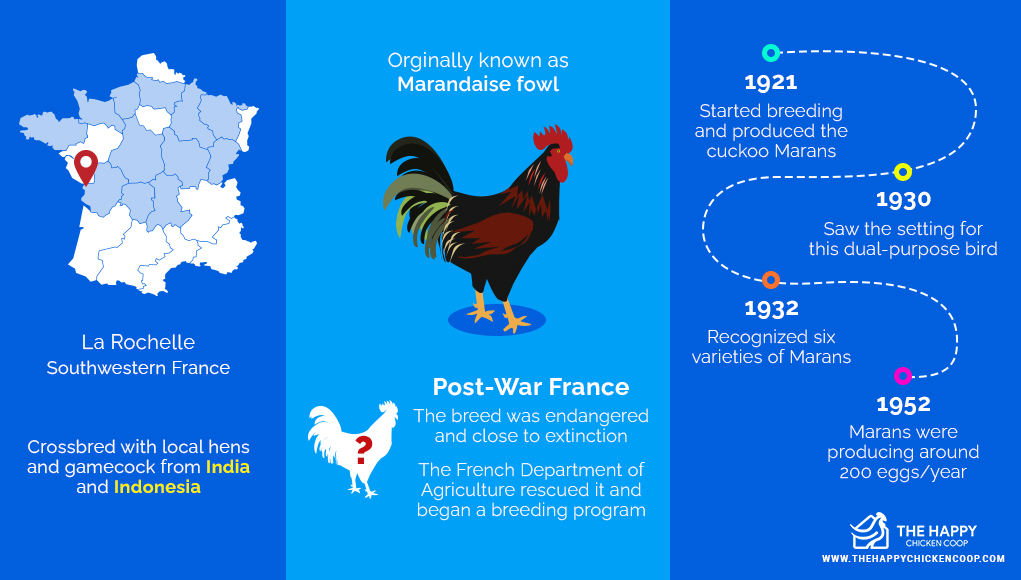
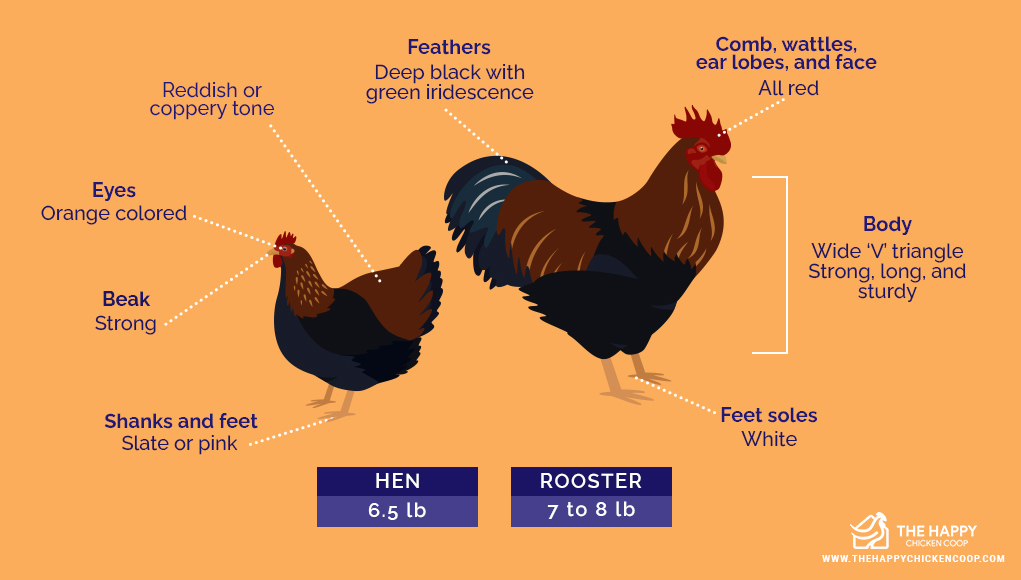
Marans
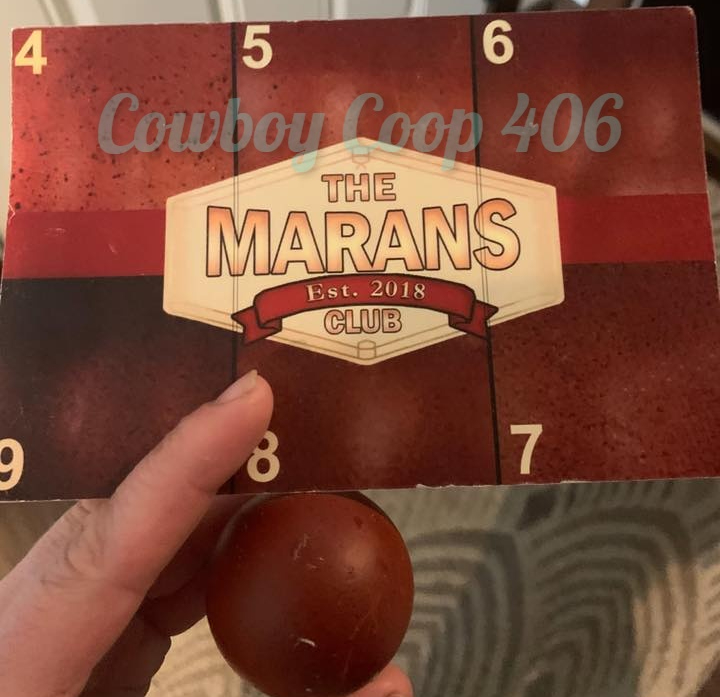
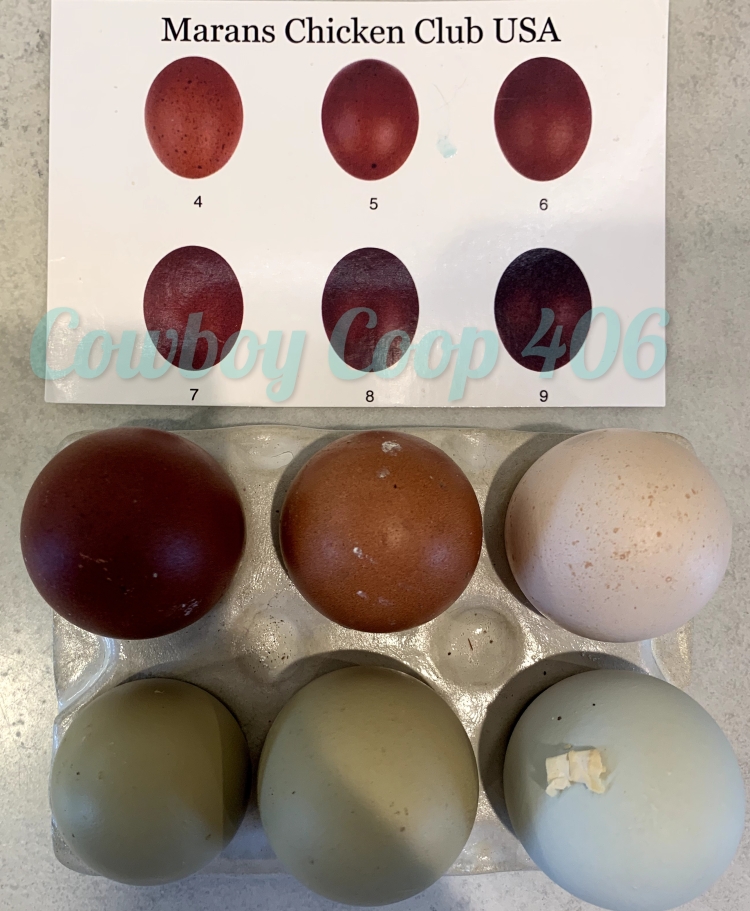
- Marans chickens lay the darkest colored brown egg in the world, and are a stunning rich chocolate color.
- Marans is always written with an “S” at the end, whether it is plural or singular. You may pronounce it with or without the “S”. The breed originated from the Aquentine (Marans) region of France.
- Black Copper, Black, Wheaten, and White Marans are currently the only 4 varieties of Marans recognized by the American Poultry Association. Breeders are currently working on other colors in hopes to have them recognized, but it will probably be a number of years before we see colors like Blue Copper, Splash, Black Silver, and other varieties recognized. (If at all!)
Below are two photos of my shade cards from TMC & MCCUSA
Silkies & Showgirls
- Silkies come in many different color varieties. However, the only approved ABA & APA show varieties are: White, Black, Buff, Blue, Splash, Gray, Partridge & Paint.
- Bearded Self Blue, Bearded White Naked Neck, and Bearded Paint are also three approved varieties, but must have a beard to be considered.
- As stated above; Silkies can be shown with or without a beard in most of the color combinations.
- Silkies have 5 toes on each foot; it is a disqualification in shows to have any different number. Silkies also have black, or slate colored skin and organs! Their meat is a priced delicacy in parts of the world.
- If you are interested in learning more about the breed standard, I would highly recommend you visit “The American Silkie Bantam Club” to learn more.
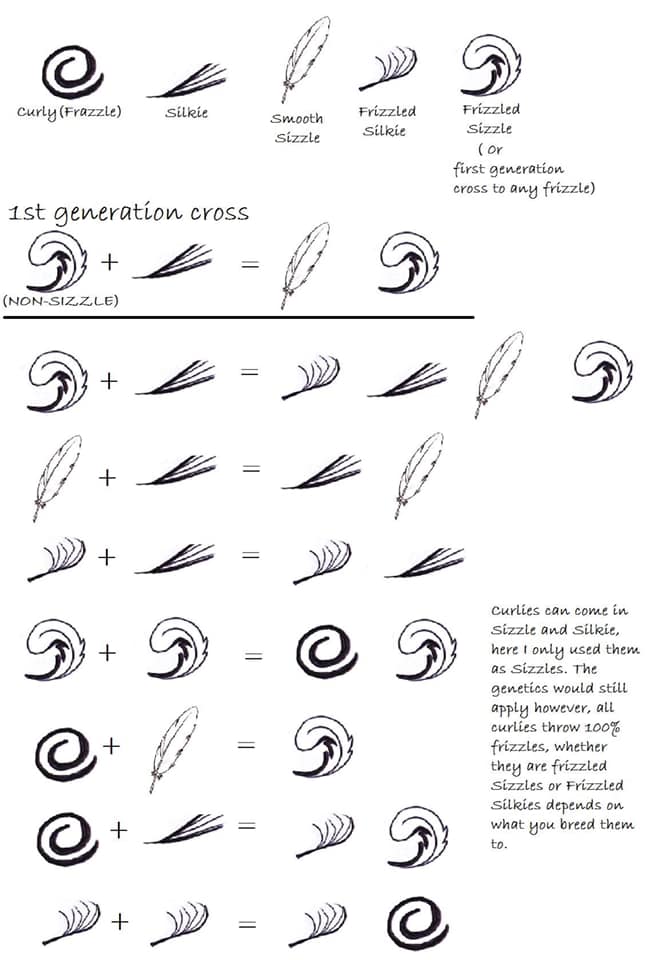
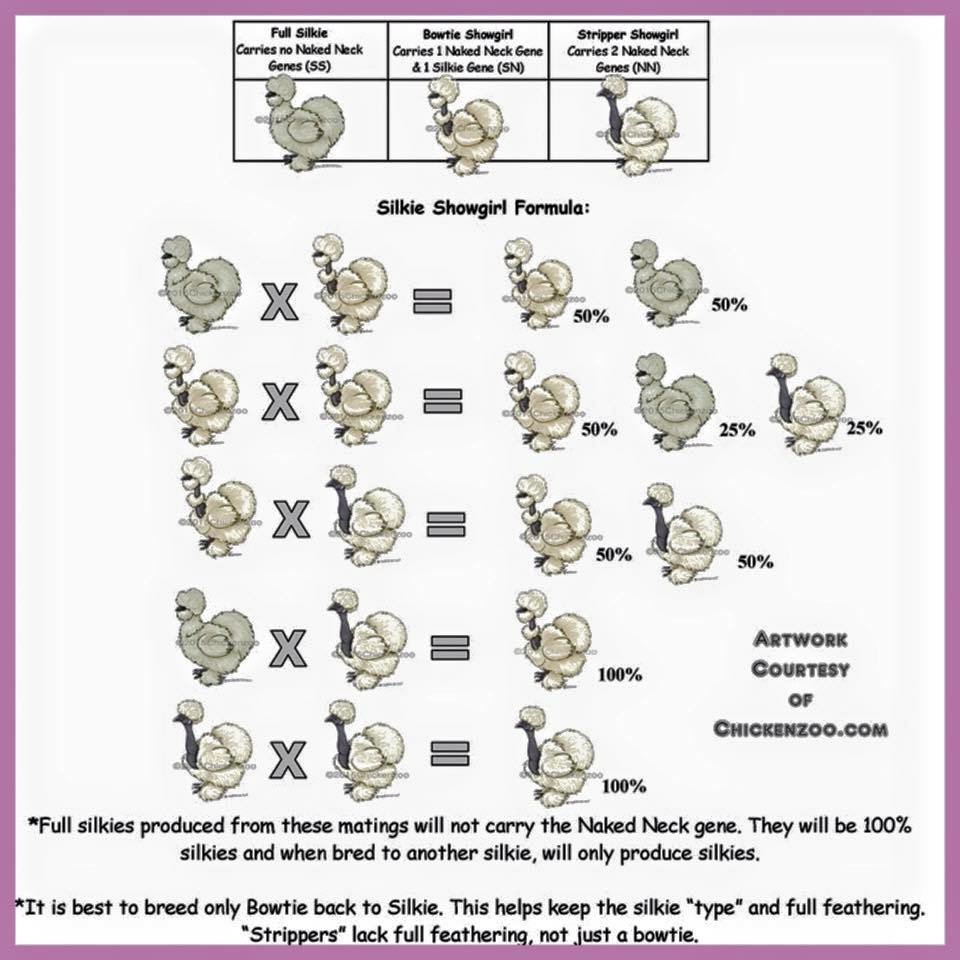
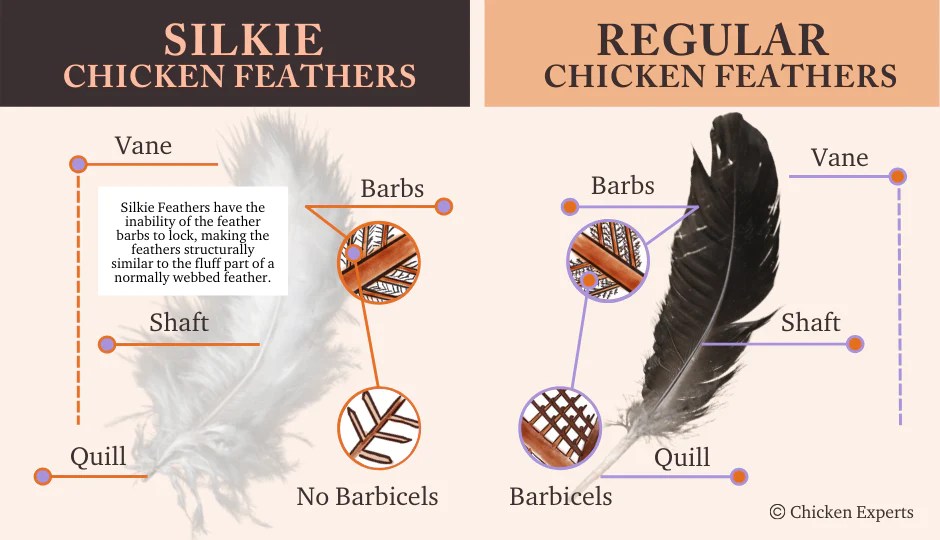
- We raise different feather types in Silkies on our farm. See the photo below on how to achieve specific feather types in Silkies.
Please Note: We do NOT breed Frizzle birds to Frizzle birds. This can result in FRAZZLE feathers, and Frazzle birds can have a plethora of health issues and defects, including enlarged hearts, balding and featherless patches, and painful feather degeneration. Please do not buy from breeders who raise Frazzle chickens, breed frizzle to frizzle birds, or even keep Male & Female Frizzle birds together! Responsible breeders will only ever breed a Frizzle to a Smooth feathered bird (or non Frizzle Silkied Feather bird) which will result in ~50/50 chance of frizzled offspring.
Olive Eggers
- Olive Egger Chickens are essentially a mixed breed; you take a blue layer and cross it with a dark brown layer and the resulting offspring will lay a brown pigment over a blue egg = an olive egg. There are a million different egg combinations to create, and if you would like to learn more about the genetics and science involved, I would recommend watching this great YouTube video from Fat Hen Farms.
- This is a link to the basic Olive Egger Chart, from author Steve Neumann, originally from the Facebook Group Olive Eggers.
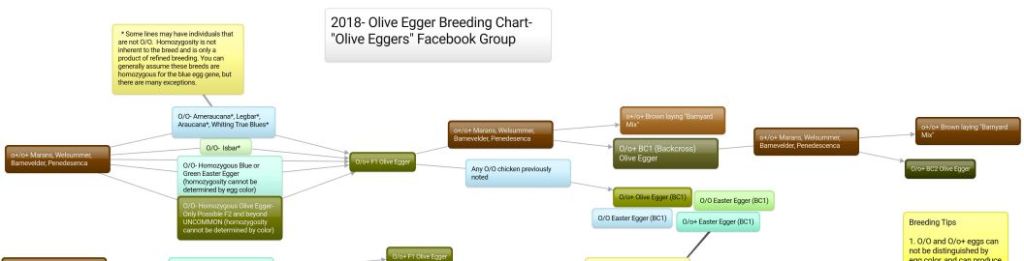
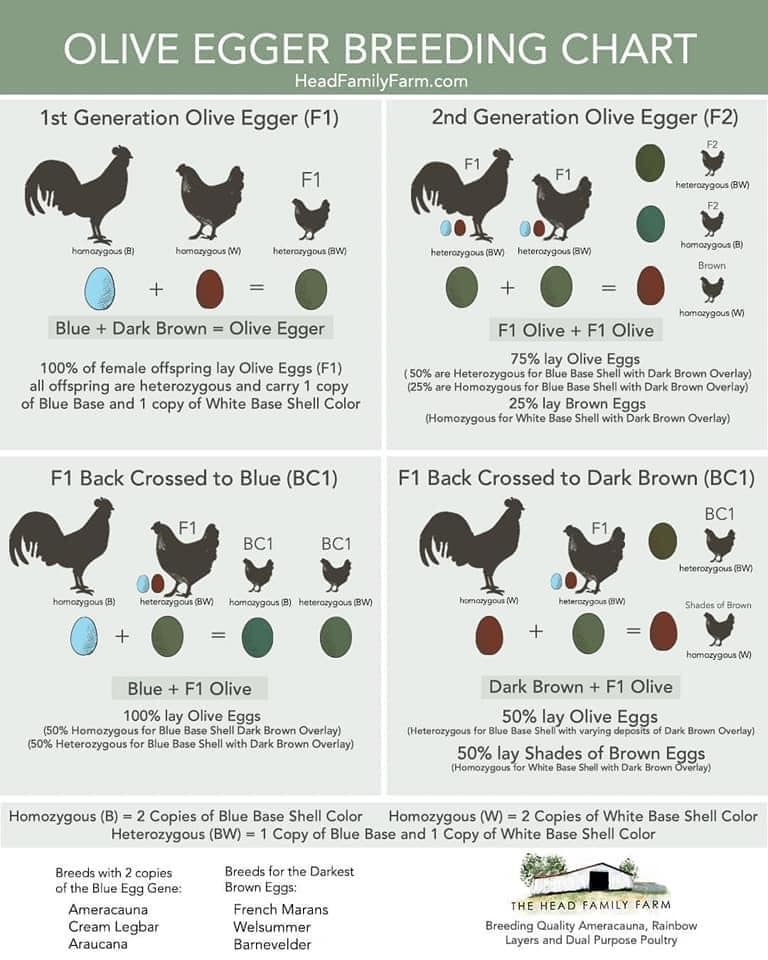
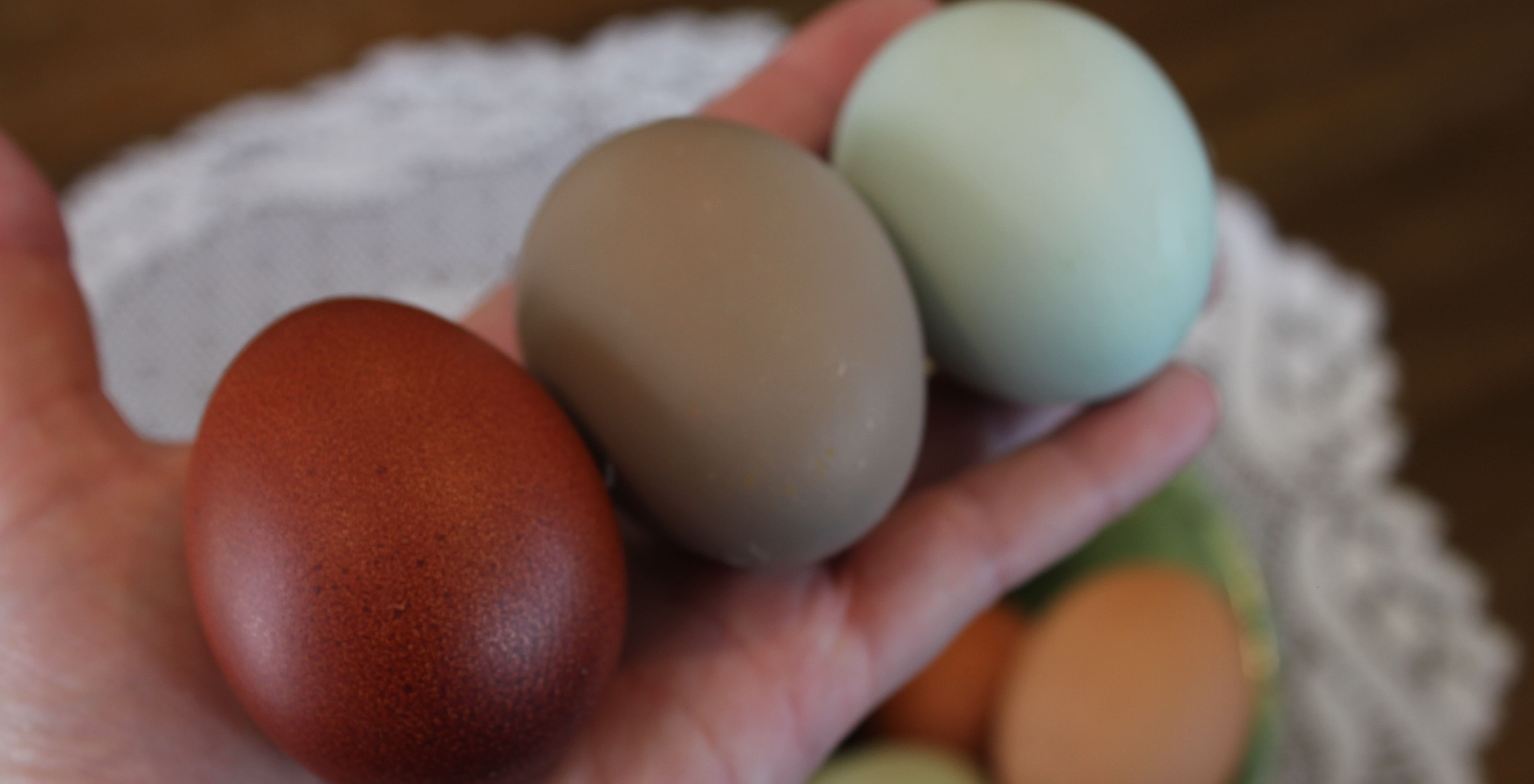
Olive Eggers do not have a Standard of Perfection, or even any developed standard at all! They are a cross breed and because of that, there is no checklist that they need to follow. Some breeders have started to develop their own lines, and have labeled them accordingly, depending on what color egg they lay. How cool is that? There are even farms that have started their own shade cards!
Below are example of different traits that Olive Eggers can have, as well as some of the different color eggs people have started to label their Olive “Sub-Classes” as.
| Combs Types | Feather Color | Feather Type |
| Feather Pattern | Eye Color | Feathered Legs |
| Beards/Muff | Tufts (Araucana) | Size/Weight |
| Egg Size | Eggs per year | Personality |
| Body Shape | Rump/Rumpless | Naked Neck |
| Silkied | Frizzled | and more! |
| Olive Egger | Sage | Mint |
| Easter Egger | Dark Green-Brown | Seafoam |
| Army | Grey/Gray | Moss |
| Khaki | Asparagus | Green Yellow |
 Cowboy Coop 406